What Two Connector Types Are Typically Used to Terminate Rg-6 and Rg-59 Cables?
A Complete Guide to Coaxial Connectors
What are the different types of coaxial connectors and what are their uses? Notice out more than in our consummate guide.

What is a Coaxial Cable?
Coaxial or coax cables are electric cables created to comport high frequency, multi-megahertz electrical signals. They incorporate an inner conducting wire, usually copper, surrounded by a protective double insulating layer and then an outer plastic sheath, giving them a distinctive appearance.
Coaxial cables are durable, easy to install, and take a wide range of uses. Their blueprint allows rapid signal transmission (around 10 megabits per second) with minimal electro-magnetic interference or point loss. Coaxial cables are the default cabling choice for many low voltage consumer electronics.
These include:
-
Televisions and telephones
-
Mobile phones
-
Satellite dishes
-
Broadband routers
-
Antennas
-
Radio equipment
Coaxial cables are available in a variety of types, distinguished by their gauge and impedance. Gauge refers to the thickness of the cablevision and is given a given a Radio Guide or RG number, with college numbers indicating thinner conducting cores. Impedance refers to the level of electrical resistance in the wire. Well-nigh coaxial cables take an impedance of either 75 or 50 Ohm. The former is primarily used for video signals and the latter for data.
Coaxial cables can come in many sizes, including:
-
RG-12
-
RG-58
-
RG-62
-
RG-213
Mutual Coaxial Cable Sizes
RG-vi: As indicated by the low number, these cables have wide central conductors with thick insulation and specialist shielding, which allows a strong point. Still, the cables themselves are thin, making them ideal for installation in ceilings and walls.
RG-11: These cables are relatively thick but as a result, they are more resistant to signal loss. This makes them a proficient choice for lengthier installations.
RG-59: The RG-59 resembles the RG-6 but, as suggested past the high number, it has a thin primal conductor. This makes information technology best for depression frequency manual over limited distances – for example, in the habitation.

What is a Coaxial Connector?
Coaxial connectors, too known as barrel or tip connectors, are used to peak and tail the cables and connect devices to external power supplies, or to connect cables to each other, while maintaining the outer interference shielding.
They are available in a multitude of different sizes to suit dissimilar cable dimensions, each of which works in combination to ensure smooth manual of the signal.
Some include switches that allow internal batteries to exist disconnected when an external power supply is connected.
Types of Coaxial Connectors
Coaxial cables are used for many dissimilar purposes and and then the connectors are equally varied. Each type and size is carefully designed to mesh seamlessly with the host cable and function in different, sometimes quite tough weather condition. They must resist stressors such as impact, pressure, high temperature and vibration.
Coaxial cables fabricated for radio frequency (RF) transmission require special connectors that provide consistent electric resistance at the point of connection with connected cables. This means that they are somewhat delicate and can be damaged hands.
The major types of coaxial connector are every bit follows:
7/16 DIN Connectors
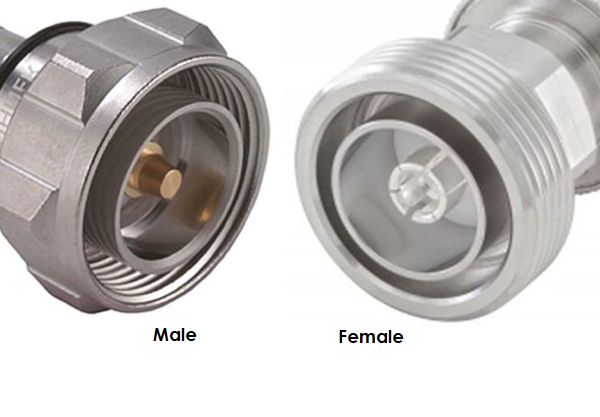
These are tough, threaded connectors primarily used for connecting lengths of coaxial cable within environments which are exposed to moisture. DIN stands for the Deutsches Institut für Normung – the German Standardisation Institute.
Unremarkably used in:
- Radio base stations
- Dissemination equipment
View Range
BNC Connectors
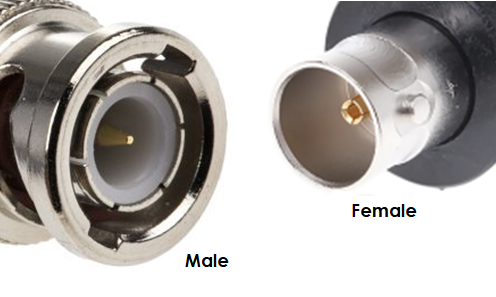
BNC (Bayonet Neil-Concelman) connectors are a smaller diverseness of connector used for test instruments, radio, tv and other AV equipment.
Designed for:
- Rapid connectedness
- Rapid disconnection
View Range
F Connectors
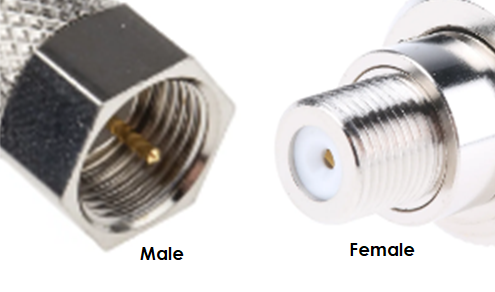
Also known as F-type connectors, these are normally used to acquit an electric signal to Boob tube sets.
Can be paired with:
- RG6 cables
- RG59 cables
View Range
FME Connectors

These are miniature threaded connectors. The name itself stands for 'For Mobile Equipment'.
Most usually used with:
- Mobile equipment
View Range
MBX Connectors
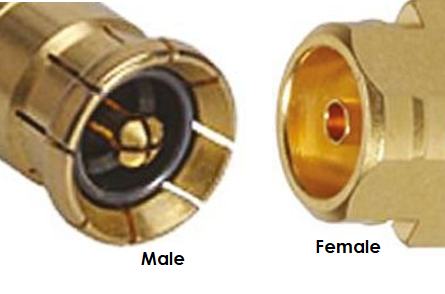
MBX connectors are used to make connections inside radio frequency equipment.
Cardinal features:
- Highly robust
- Offer good ability handling
- Swell electrical performance
View Range
MCX Connectors
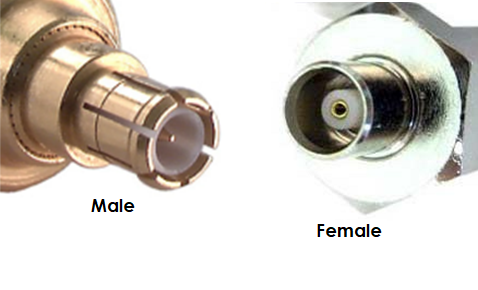
MCX stands for micro coaxial. These are a smaller connector ideal for use in locations where space is express. Like many other coaxial connectors, they are designed for easy attachment and removal.
Platonic applications:
- Television set tuner card for PCs
- GPS systems
- Wi-Fi routers
View Range
MMBX Connectors
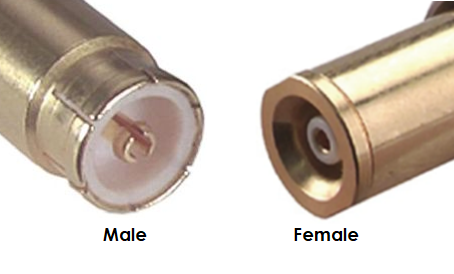
Similar to MBX connectors, MMBX connectors provide reliable and flexible connections inside radio communications equipment - fifty-fifty if misaligned.
Fundamental features:
- Allows multiple connections between adapters
View Range
North Connectors
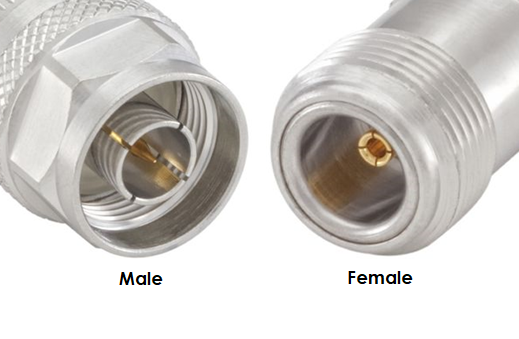
Also known as N-type connectors, these medium-sized adapters boast many features, such as being waterproof. They were named after their inventor, American electric engineer Paul Neill.
Ideal applications:
- Radio transmission equipment
View Range
OSMT Connectors
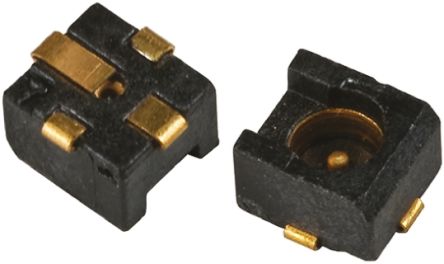
OSMT connectors are typically made from polymer and gold or nickel plating.
Widely used within:
- Telecoms
- GPS devices
- Vehicle and consumer electronics
View Range
OSP Connectors
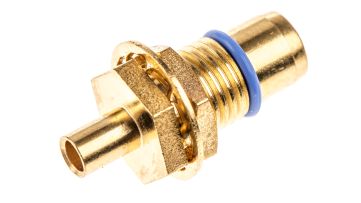
These connectors characteristic a snap-on or slide mechanism for mating.
Uses include:
- Radio equipment
View Range
QLI Connectors
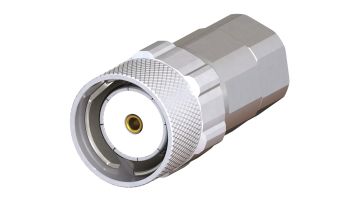
These connectors are a variant of DIN vii/16 connectors, making use of the same bayonet locking mechanism and offer similar operation.
Key features:
- Very tough
- Proceed performing in harsh environments
View Range
QMA Connectors
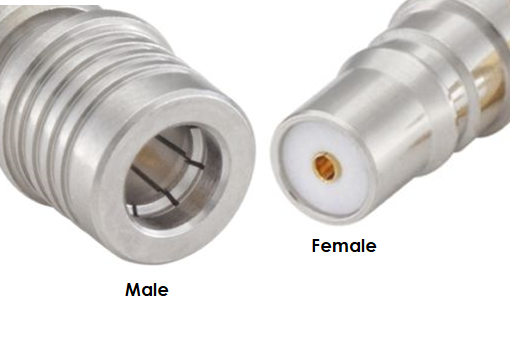
QMA connectors are a 2nd variant of SMAs – the Q stands for quick, and they are designed for rapid, like shooting fish in a barrel attachment and detachment without a torque spanner. QMA connectors have a robust design and are resistant to vibration, making them platonic for apply in outdoor settings.
Ideal applications:
- Radio base stations
- Air traffic command systems
- Manual equipment
View Range
QN Connectors
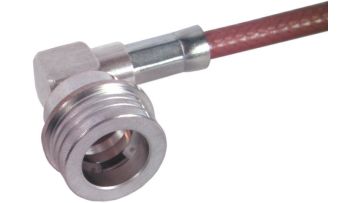
These are a quick-lock variant of the N-blazon connector and are compatible with high ability cables.
Ideal for:
- Indoor applications
- Outdoor applications
View Range
SHV Connectors
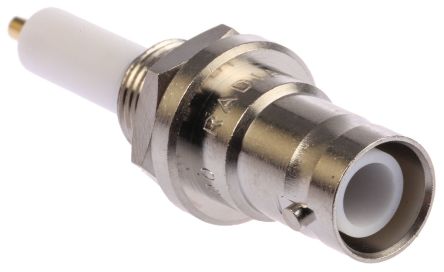
Safety Loftier Voltage (SHV) connectors use a bayonet-locking mechanism which is similar to that used in MHV and BNC connectors. They characteristic a distinctive protruding insulator.
Designed for:
- Rubber employ with high voltage cables
View Range
SMA Connectors
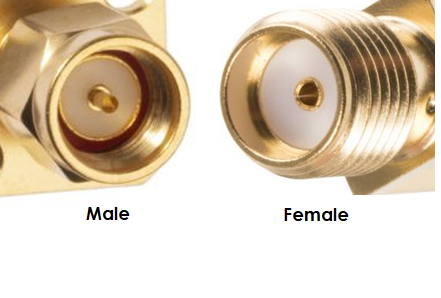
SMA (Subminiature Version A) connectors can oftentimes be confused with the F coax connector. However, there is a slight (2mm) departure betwixt the 2 difference types.
Typically used for:
- Walkie talkies
- Handheld radios
- Radio telescopes
- Wi-Fi antennas
View Range
SMB Connectors
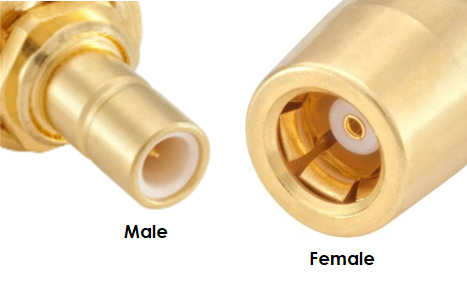
Similar to the in a higher place, Subminiature Version B (SMB) connectors have an easy-to-use design.
Widely used with:
- Telecoms equipment
- Industrial electronics
View Range
SMC Connectors
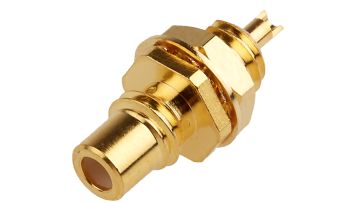
Subminiature Version C (SMC) are a 2nd variation of the SMA connector. They feature a spiral-type interface.
Fundamental features:
- Provides air-tight closure against leakage and damage
View Range
SMP Connectors
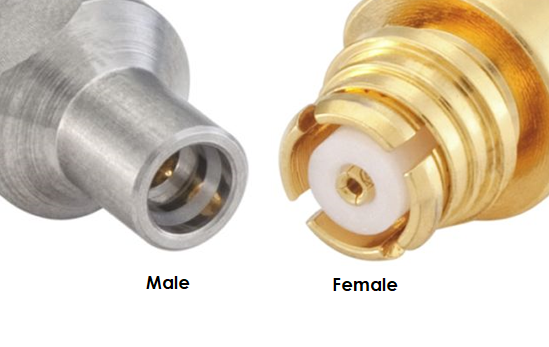
Subminiature push-on (SMP) connectors take a snap-on interface and strong electrical performance. They are a practiced selection for utilise in more than demanding environments.
Cardinal features:
- Very robust
- Can withstand shock and vibration
View Range
TNC Connectors
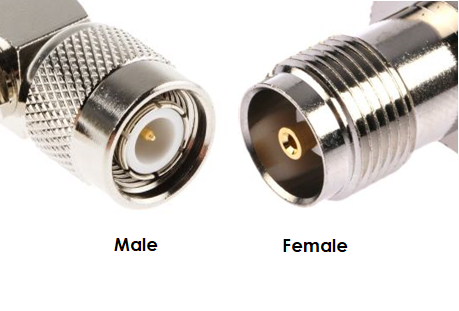
TNC (Threaded Neil-Concelman) connectors are a variation of BNC connectors designed for outdoor use.
Common uses:
- Radio antennas
- Mobile phone antennas
View Range
Triax Connectors
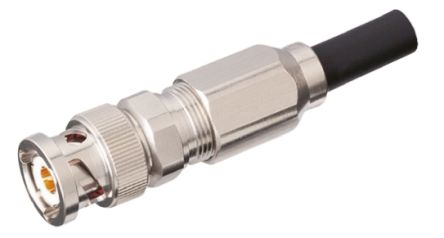
These variants of the basic BNC connector are used with triaxial (triax) cables. They provide greater bandwidth but are typically more expensive.
Central features:
- An boosted layer of insulation
- An extra conducting sheath
View Range
Twinax Connectors
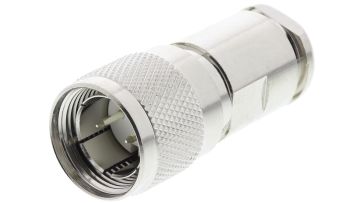
Twinax connectors are a doubled variation of the BNC connector and are used to forestall signals from beingness mixed. They are also known equally Twin BNC connectors.
Cardinal features:
- A latching mechanism
- Crimp connectors for piece of cake installation
- Both male person and female contact points
View Range
UHF Connectors
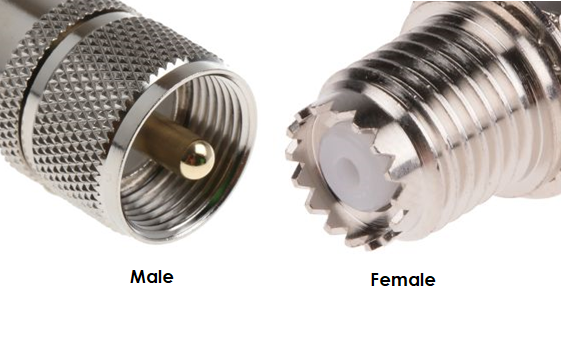
UHF stands for Ultra High Frequency, but despite the name, engineering science has moved on since their invention and they are now primarily used with low frequency devices.
Commonly used as:
- Video connectors for armed services equipment
View Range
UMCC Connectors
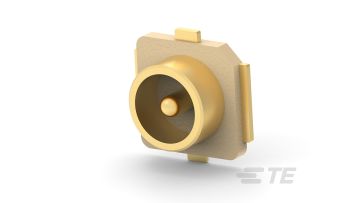
The Ultraminiature Coax connector (UMCC) is used for frequency signals up to 6 GHz in extremely small scale environments – for case, laptop circuit boards and embedded circuitry.
Unremarkably used to:
- Make connections to GPS
- Connect to Wi-Fi antennas
View Range
How to Choose Your Connector
When selecting a coaxial connector, you will need to know the central parameters of the cablevision you plan to connect. These include:
-
The voltage
-
The environment
-
The required frequency
-
Whether a male or female connection is required. Male connectors have protruding metal pins while female person connectors accept a recess designed to receive the pins
Coaxial Connector Gender Types
In electric technology, coaxial and other electrical cables are conventionally divided into two types: male and female. The former typically take a connecting pin or protrusion of some kind that is inserted into indentations or slots in the latter – for case, plugs and sockets (likewise known equally jacks). Connecting a male person to a female connector is referred to equally 'mating' them.
Coaxial cable genders were designed not just to allow physical connections but also to ensure that power or signal data flows in the correct direction, from male to female connectors with matching electric polarity, preventing interference and dangerous installations. Typically, female connectors are more resistant to damage than male ones so these tend to exist placed in crucial areas with males relegated to connecting cables, which can be replaced more easily.
Annotation that the terms 'male' and 'female person' are non universally used, especially in relation to lower voltage domestic appliances. Widely used electrical standard IEC60320 does non specify gender types for the latter.
Male person Coaxial Connectors
Male coaxial connectors typically take a straightforward design, combining a key pivot designed to fit a uniform plug on the female connector, alongside a spring-loaded electrical contact bespeak located at the side.
Female Coaxial Connectors
Female coaxial connectors commonly feature a metallic tube designed to precisely incorporate the corresponding male pin, normally called the tip. This is surrounded past an insulating layer and so an outer cylinder, typically referred to every bit the barrel or sleeve. The latter functions as an electrical contact point, aslope the inner tube.
Genderless Coaxial Connectors
Genderless coaxial connectors combine male person protrusion points and female slots in the same connexion point, enabling these to be continued to either male or female connectors of matching size and type. They let cabling within complex installations to be repurposed or reconnected quickly, without awkward removal and repositioning if it needs to be connected to a different component or cablevision. They have a contrary electrical polarity, with a pin protruding from the female socket and slot in the male person plug designed for that pin.
Genderless coaxial connectors are also known as combination connecters. They are non the right choice for installations in which a carefully controlled period of current in a single direction is required for rubber or functionality reasons.
FAQs
How Practice You lot Connect or Change a Coaxial Connector?
Coaxial cables and their corresponding connectors accept different uses but the fundamentals of connecting or replacing them remain much the aforementioned. Here is how to conduct this procedure:
-
Ensure that the cable is removed from whatever power sources. Electrical shocks and injuries could upshot from adjusting a alive coaxial cable
-
If there is already a connector in place, remove it. Information technology may respond to a elementary twist or yous may need to make apply of a tool such as a construction knife or wire strippers
-
Prepare the coaxial cable, using a wire stripper or similar device. Make a small incision towards the end of the cable, deep enough to expose the underlying copper, so a 2d cut in the outer jacket of the cable – in both cases being careful not to cutting into the underlying layers. Utilize these cuts every bit leverage to peel back the jacket and then the wire braiding beneath, going back the same length every bit the connector
-
Place the connector onto the exposed length of wire
-
Attach the connector to the wire past applying pressure level. Use a compression tool – for example, a pair of pliers – or a more than specialist crimping tool. Crimping is but a modified form of compression, so the two methods are very similar. In both cases, insert the connector which has been placed over the cablevision into the tool and utilize firm pressure. Finally, spray liquid electrical tape to whatsoever remaining exposed areas and let this to dry
What are Micro Connectors?
Micro-coaxial connectors are fabricated for the smallest cables – typically not exceeding 1.5cm in diameter and less than 6 GHz. Their pocket-sized size makes them well suited for utilize in complex but physically modest electronics such as mobile phones, GPS receivers, Wi-Fi routers, and PC equipment.
Where to Side by side?
Source: https://uk.rs-online.com/web/generalDisplay.html?id=ideas-and-advice%2Fcoaxial-connectors-guide
0 Response to "What Two Connector Types Are Typically Used to Terminate Rg-6 and Rg-59 Cables?"
Publicar un comentario